Friday, September 27, 2019

What Happened to Religion?

At a recent family gathering in Canada to celebrate my cousin's 90th birthday, I mingled with people from all over the continent.  They belonged to various generations, religious backgrounds and ethnicities, the result of more than 150 years of intermarriages since my ancestors first traveled across the Atlantic Ocean from the Old Country to these shores.

I found the party-goers had one thing in common, regardless of age or upbringing: not one of them professed any religious beliefs.

Indeed, when the subject arose in private conversations, cousins, in-laws and assorted friends all said they had left the faiths of their parents and now accepted none. Several admitted easily that they had shed any belief in a god.
Empty pews

I did not ask why.  However, as a religious historian, I am well aware that the microcosm of this party mirrored what is happening worldwide.  In this country, an estimated 25 percent of the population no longer identifies with any particular religion.  In Canada, the numbers vary from province to province, ranging as high as 49 percent professing no religious affiliation.  Overall, the number of Canadians who claim no ties to organized religion is almost identical to the U.S. figure.

In both counties, that's the highest percentage of nonbelievers ever recorded, and it continues to climb in North America and worldwide.  A recent Gallup poll  found that "the percentage of Americans who report belonging to a church, synagogue or mosque at an all-time low, averaging 50 percent in 2018."

The old spiritual could claim that "that old-time religion is good enough for me."  That's simply not true anymore.

What happened?

Artist's concept of Paul
Lots.  For starters, all religions have a lifespan.  They start to lose their potency as nothing changes.  If Jesus was supposed to bring about an era of peace and happiness, why hasn't he?  Paul faced the question two millennia ago.  When would Jesus return  to implement that promised era?  At first, Paul answered that the time was soon.  Later, he said no one would know.

After 2,000 years, of nothingness, we know.

We are also aware that contrary to the prophet Isaiah's promise, lions are not going to lie down peacefully with lambs.  Indeed, as fresh water becomes an even more precious commodity in coming years, we can expect increased bloodshed.

Over time, the claims of holy books, endlessly repeated by the devout, have turned into dust in the face of reality.  A devout friend wrote a novel that included Jesus but gave him no role because her book claimed the existence of heaven, but no hell to be saved from.  When the contradiction was pointed out, she said that Jesus was too much a part of her life to get rid of.  So, she just reduced his status to that of an onlooker.

It's a short step to discarding him completely, something an army of former Christians have started doing.

Then, too, we are more aware of many of the 4,600 beliefs that humans adhere to.  Claims of a unique faith or special providence sound increasingly absurd, forcing believers to insist that only a fortuitous coincidence allowed them to be born in the one "true" faith.

Only someone extremely gullible (or desperate) would accept that argument.

Random universe
In addition, we can all see that the pious, holy, saintly figures among us suffer the same vicissitudes of life as everyone else.  Detailed studies have proven that reality. Prayer doesn't help; neither does good deeds, church attendance or adherence to religious dictates.  Indeed, as studies of the universe have shown: everything happens randomly with no hint of an organizing hand.

On top of that, those most ardently religious have become associated with bigotry and arrogance, which are not welcoming tendencies.  Followers have become increasingly dismayed with ministers who have aligned themselves and their faiths with known pedophiles and prejudice over decent individuals who don't share the same beliefs.

Scene from Man of La Mancha
At the same time, the devout have divorced themselves from science and any form of contrary
scholarship, turning religion into the final refuge of the ignorant.

I'm not suggesting religious folks are not sincere.  Only that, through their beliefs, they have severed ties to the rest of society that is increasing conscious of research and the mounds of contrary evidence.  Sincerity offers no proof of validity, only slavish devotion to shadows.  As was noted in the Broadway show Man of La Mancha: "It's prudent to recall.  A man with moonlight in his hands has nothing there at all."

Those pious hands clasped in prayer embrace emptiness.

Religion, of course, was invented to provide the answers to the deep questions that still vex mankind.  Science has pierced and obliterated most of the best-loved answers while demolishing the historical basis upon which the answers were given. The biblical stories turn out to be no different than Aesop's Fables; their claims of accuracy buried under archeological research and in-depth analysis of the times when the texts were written.

In the end, believers found nothing to hold on to.  So, they let go.   They have retained their morals and ethics; they have discarded the trappings of clergy, sacred buildings, holy days and rituals.

As I noted at the party, none of the attendees seemed worse off for having replaced the warm embrace of religion with the cooler, but more welcoming cloak of reality. 


Bill Lazarus is a religious historian who has published multiple books on the topic, including Comparative Religion for Dummies (Wiley Press) and Noel: The Lore and Tradition of Christmas Carols (Halifax Press).  He also writes novels, including Revelation (Southern Owl Press) and The Great Seer Nostradamus Tells All (Bold Venture Press).  An active public speaker, he can be contacted via Facebook.


Monday, August 5, 2019

Studies Examine Power of Prayer


A friend in New Smyrna Beach, Florida, after learning that I don’t believe in God, said she would pray for me.  She should have prayed for her husband, who died weeks later.  Nevertheless, she is just one of many people claiming to pray for me.

Actually, it’s hard to go anywhere in this society without seeing someone praying for someone or something.  Many athletes clearly offer prayers or say thanks after some feat in a game.  Prayers precede all NASCAR races, among other events.  They are standard fare in hospitals, religious settings and rituals, such as weddings.

Muslim prayer
Muslims are obligated to pray five times a day. Orthodox Jews are supposed to pray three times a day.  Christians are encouraged to pray.  In fact, virtually all religions include prayers in various ceremonies. In the once-popular movie, Bruce Almighty, the main character is confronted with multitude of prayers God supposedly sees on a daily basis and answers all of them positively, although only affecting a small cluster in the Buffalo area.

That idea that God listens to prayers remains pervasive, in and out of the movie theater.  Look at the reaction after one of the horrible mass shootings in this country.  Everyone offers prayers.

That raises the question: Do prayers actually have any effect?

Galton
Ask any religious folks, and they are sure to insist prayer does help.  Scientists, however, have been studying the effect of prayers since the 1800s.  They have found some very different results.

The scholar approach was kicked off by Sir Francis Galton, a 19th century English scientist best known for his studies of human intelligence.  In the 1870s, he decided to investigate prayer using a rigid methodology in an effort to show what effect, if any, prayer had. His study appeared in the 1872 Fortnightly Review and was reprinted in August 2012 in the International Journal of Epidemiology, Volume 41, Issue 4.

In it, Galton began with a search of literature and reported, “I have been able to discover hardly any instance in which a medical man of any repute has attributed recovery to the influence of prayer.” He added that many people have a “general belief in the objective efficacy of prayer” but no one could offer a specific example.

He then conducted a study of the mean age attained by males of various classes who had survived their 30th year, from 1758 to 1843.   He said kings probably were the targets of more prayers than the average person, but “literally (were) the shortest lived of all who have the advantage of affluence. The prayer has therefore no efficacy.”

His study also included clergy, lawyers and medical men, noting for clergy that it’s “their profession to pray, and they have the practice of offering morning and evening family prayers in addition to their private devotions.”

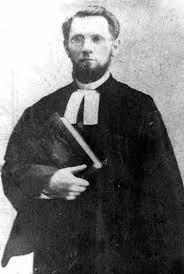
1800s clergyman
Clergy, he found, show a life-value of 69.49, as against 68.14 for the lawyers, and 67.31 for the medical men.  Sounds positive, but, Galton added, “this difference is reversed when the comparison is made between distinguished members of the three classes … the value of life among the clergy, lawyers and medical men is as 66.42, 66.51 and 67.07, respectively, the clergy being the shortest lived of the three. Hence, the prayers of the clergy for protection against the perils and dangers of the night, for protection during the day and for recovery from sickness, appear to be futile in result.”

Galton went on to examine missionaries, who travel amid a cloud of prayers.  “The painful experience of many years shows only too clearly that the missionary is not supernaturally endowed with health.  He does not live longer than other people, “ Galton concluded.

Naturally, there have been plenty of studies ever since.  Several supported the idea that prayers have a positive effect.  However, attempts to duplicate the results invariably have failed.  Several touted studies have been discredited, including one where the main author turned out not to have participated in the study and was given help to write it.

Valid, uncontested studies, however, are consistent. 

Open heart surgery
A 2001 Mayo Clinic double-blind study that covered 799 discharged coronary surgery patients concluded "intercessory prayer had no significant effect on medical outcomes after hospitalization in a coronary care unit."

A 2006 Harvard study, the largest of its kind, reported that “not only did prayer not help the patients, those that were told they were being prayed for experienced more complications.”  The research, published in the April 4 issues of the American Heart Journal, included 1,800 people who underwent coronary bypass surgery at six different hospitals.

Not only that, but patients who knew that others were praying for them fared worse than those who did not receive such spiritual support, or who did but were not aware of it.

More recently, research by Chittaranjan Andrade and Rajiv Radhakrishman, published in the 2009 October-December issue of the Indian Journal of Psychiatry, found “intercessory prayer did not influence the 26-week outcome after discharge from a coronary care unit.”

In addition, the researchers reported, “Remote intercessory prayer did not improve outcomes after coronary artery bypass graft surgery. In fact, the knowledge of being prayed for was associated with a slightly but significantly higher rate of postsurgical complications.”

Orthodox Jews in prayer
Prayers apparently are dangerous.  Psychiatrists suggest that people being prayed for think they are worse off and therefore see their health decline.

Regardless, the evidence clearly shows that prayer has no positive effect, whether offered for a friend, a patient or the victims of mass shootings.

I don’t recommend stopping prayer, but, based on extensive research, proper medicine and stronger laws likely will have a more beneficial impact.

Long-time religious historian Bill Lazarus regularly writes about religion and religious history with an occasional foray into American culture.  He holds an ABD in American Studies from Case Western Reserve University.   He also speaks at various religious organizations throughout Florida.  You can reach him at wplazarus@aol.com. He is the author of the recently published novel The Great Seer Nostradamus Tells All as well as a variety of nonfiction books, including The Gospel Truth: Where Did the Gospel Writers Get Their Information; Noel: The Lore and Tradition of Christmas Carols; and Dummies Guide to Comparative Religion.  His books are available on Amazon.com, Kindle, bookstores and via various publishers.  He can also be followed on Twitter.


Monday, July 15, 2019

Biblical Commentary Counters Quotes


I really enjoy when friends cite the Bible or come up with a biblical quote to support some argument.  The Bible is great for that. With 66 books in two separate sections, you can find support for almost any idea or claim. 

After all, the Bible is a collection of books, written over hundreds of years by multiple, mostly anonymous, authors, edited and revised by countless more.  Sources ranged from other, now-lost texts to simple imagination. The authors were trying to present information that supports their beliefs.  If that meant creating and/or ignoring facts, so be it.  They didn’t hesitate.  The end result is a wonderful compilation of human thoughts, stories and ideas, with ethics and moral ideals woven into the text.  The Bible has served as a guide and inspiration to countless humans.

It also inspired a lot of commentary by scholars less interested in quoting and more interested in content.  I’ve collected a lot of their thoughts about the Bible and want to share them.

·        “Let us examine the Scriptures.”  Those words have undone the world.  John Selden (English jurist) 1689

Paine
·        When we read the obscene stories, the voluptuous debaucheries, the cruel and tortuous executions, the unrelenting vindictiveness, with which more than half the Bible is filled, it would be more consistent that we call it the word of a demon than the word of God.  It is a history of wickedness that has served to corrupt and brutalize mankind.  Thomas Paine, The Age of Reason, 1794.

·         The Bible contains some of the most sublime passages in English literature, but is full of contradictions, inconsistencies and absurdities.  Elizabeth Cady Stanton (American suffragette), 1896

·         Subtract from the New Testament the miraculous and the highly impossible, what would be the remainder?  George Eliot (author) 1860

·         All the biblical miracles will at least disappear with the progress of science.  Matthew Arnold (poet), 1863

·         The biblical account of the creation of Eve is a preposterous fable.  Thomas Huxley (biologist), 1874

·       
Twain
 
It ain't the parts of the Bible that I don't understand that bother me, it's the parts I do understand. Mark Twain (author), 1902

·         The Bible is so human a book that I cannot see how belief in its divine author can survive reading it.  William James (psychologist/philosopher), 1904

·         I know of no book that has been a source of brutality and sadistic behavior, both public and private, that can compare to the Bible.  James Paget (surgeon), 1899

·         The Bible is literature, not dogma.  George Santayana (author), 1920

·         The Good Book -- one of the most remarkable euphemisms ever coined.  Ashley Montague (writer), 1930

·         The Old Testament is responsible for more atheism, agnosticism, disbelief -- call it what you will -- than any book ever written; it has emptied more churches than all the counter-attractions of cinema, motorcycle and golf course.  A.A. Milne (author), 1920

·         There is no doubt that the Bible became a stumbling-block in the path of progress, scientific, social and even moral.  It was quoted against Copernicus as it was against Darwin.  The common assumption … that the moral influence of the Bible has been wholly good, and that all is needed to improve our society is to "spread the Gospel," is not born out by a candid study of history. Preserved Smith (historian), 1925.

Allen
·         There is scarcely a page of the Bible on which an open mind does not perceive a contradiction, an unlikely story, an obvious error, an historical impossibility of one sort or another. Steve Allen (actor/author), 1960

The comments were based on what the Bible really says, not the honeyed words of believers.  Let’s not forget the heartwarming biblical advice to annihilate opposition, including their animals, or that sorcerers should be murdered, the gay people should be severely punished.  How about these gems:

·        Deuteronomy 7:1-2: God orders the Israelites to exterminate the men, women, and children of seven nations and steal their land.

1 Timothy 2:12: I do not permit a woman to teach or to have authority over a man; she must be silent.

1 Peter 2:18: Slaves, submit yourselves to your masters with all respect, not only to the good.

Revelation 21:8: Non-Christians are condemned to eternal torture. 

Then there are all the contradictions.  I’ve runs lists before.  Here are some new ones:

Jesus with cross
·        Jeremiah 7:22: God denies he ever gave the Israelites commandments about animal sacrifices. Exodus 29:38-42 and many other verses:  God requires the Israelites to offer animal sacrifices.

·         John 19:17: Jesus carries his own cross. Mark 15:21-23:  A man called Simon carries the cross.

And, of course, nonexistent events touted in the Bible.  As author and humanist Robert Ingersoll noted, the first-century Jewish historian Josephus, “the best historian the Hebrews produced, said nothing about the life or death of Christ; nothing about the massacre of the infants by Herod; not one word about the wonderful star that visited the sky at the birth of Christ; nothing about the darkness that fell upon the world for several hours in the midst of day; and failed entirely to mention that hundreds of graves were opened, and that multitudes of Jews rose from the dead, and visited the Holy City?”
Ingersoll

He added, “Is it not wonderful that no historian ever mentioned any of these prodigies?”

The wonder really is that, in today’s world, filled with the knowledge readily available to anyone with the slightest interest, that people still quote the biblical text as fact.

As the American Humanist Association posted on its website: “By treating this mistake-ridden book as the word of God, humanity has been led down many paths of error and misery throughout history. In too many ways, the Bible continues to produce such results.”

Quoting from it, as if it represents accuracy, only continues to add to its centuries-long toll.

Long-time religious historian Bill Lazarus regularly writes about religion and religious history with an occasional foray into American culture.  He holds an ABD in American Studies from Case Western Reserve University.   He also speaks at various religious organizations throughout Florida.  You can reach him at wplazarus@aol.com.  He is the author of novels and nonfiction books, such as The Gospel Truth: Where Did the Gospel Writers Get Their Information; Noel: The Lore and Tradition of Christmas Carols; and Dummies Guide to Comparative Religion.  His books are available on Amazon.com, Kindle, bookstores and via various publishers, including Bold Venture Press and Southern Owl.  His website is wlazarus.com.